Friendly movement, streets recordedPath not recordedEnemy · objective · crash siteControl measureImagery: Esri, Maxar · recent, not 1993
DTG
031530C OCT 93
Phase
Operation plan
Map
Mogadishu · UTM 38N
Remembering
18 Americans · 1 Malaysian · Hundreds of Somalis
Eighteen hours in one city
On a Sunday afternoon, 3 October 1993, about 160 American soldiers flew and drove into the heart of Mogadishu to seize two men. The raid was supposed to take an hour. It took the rest of the day, and all of the night.
When the sun came up, 18 Americans and at least one Malaysian soldier were dead or dying, and more than 70 Americans were wounded. Hundreds of Somalis had been killed, many of them civilians. How many, exactly, no one knows.
What follows is the battle as it unfolded, hour by hour, on the map of the city where it was fought.
A famine, then a war
In January 1991, Somalia's government collapsed, and clan militias went to war over what was left: the country, and its food. Drought and looting turned hunger into famine. Somewhere between 200,000 and 300,000 people died in 1991 and 1992.
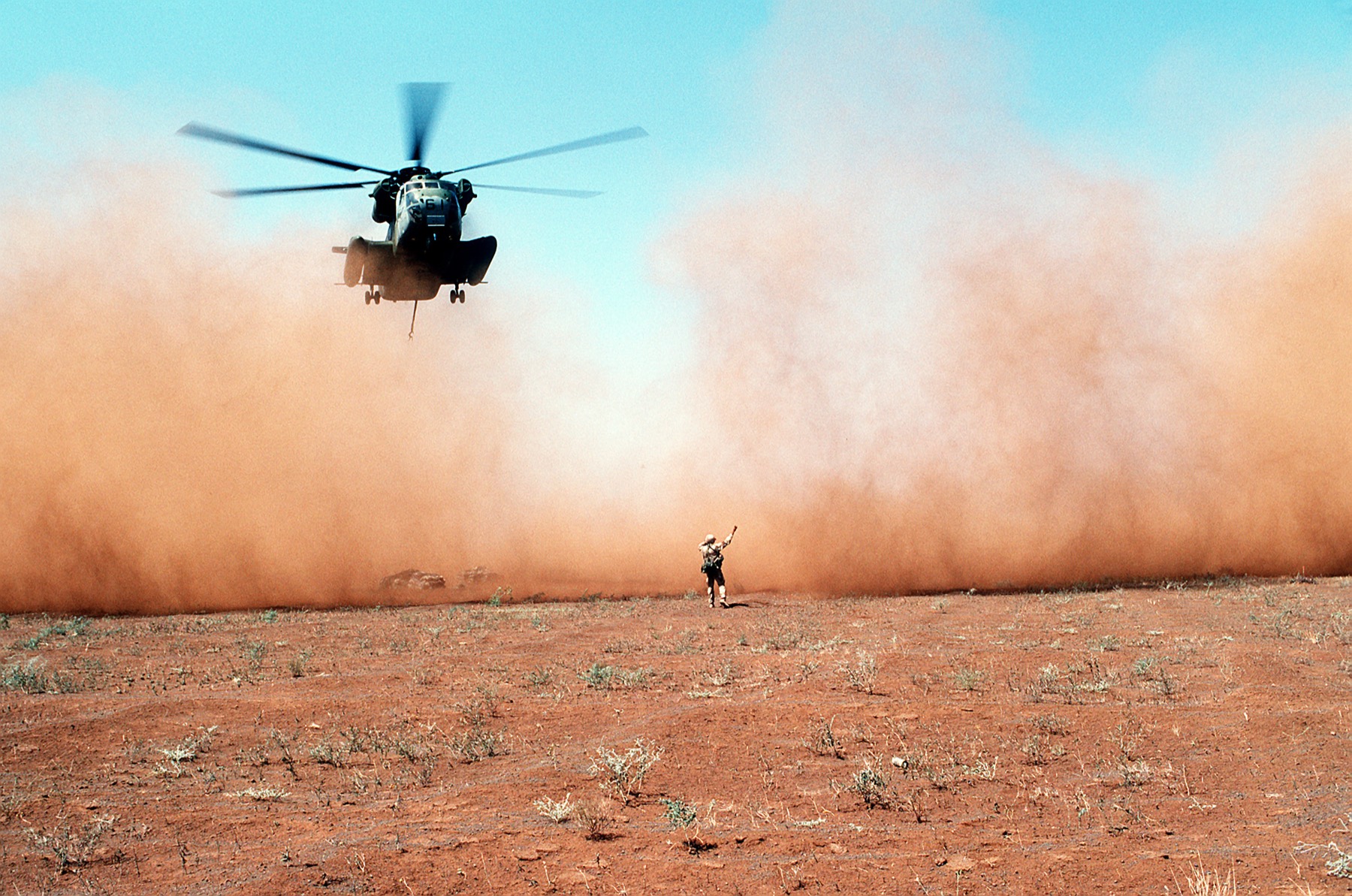
In December 1992, President George H. W. Bush sent American troops to protect the relief effort. The first Marines landed at Mogadishu airport on 9 December. Soldiers from 23 nations followed them. The mass starvation ended.
Grain delivery, Somalia, 1993U.S. Navy photo, PHCM Terry C. Mitchell
The mission turns
In May 1993, the United Nations took command, and its ambitions grew: disarm the factions, rebuild the country. The strongest faction, General Mohamed Farrah Aidid's Somali National Alliance, would not go along.
On 5 June, Aidid's militia ambushed Pakistani peacekeepers, killing 24 and wounding 44. The UN demanded the arrest of those responsible, and through the summer the violence fed on itself. On 12 July, American helicopters struck an SNA meeting at the Abdi house. On 8 August, a mine killed four American military police. On 25 September, an American Black Hawk was shot down, and three soldiers died.
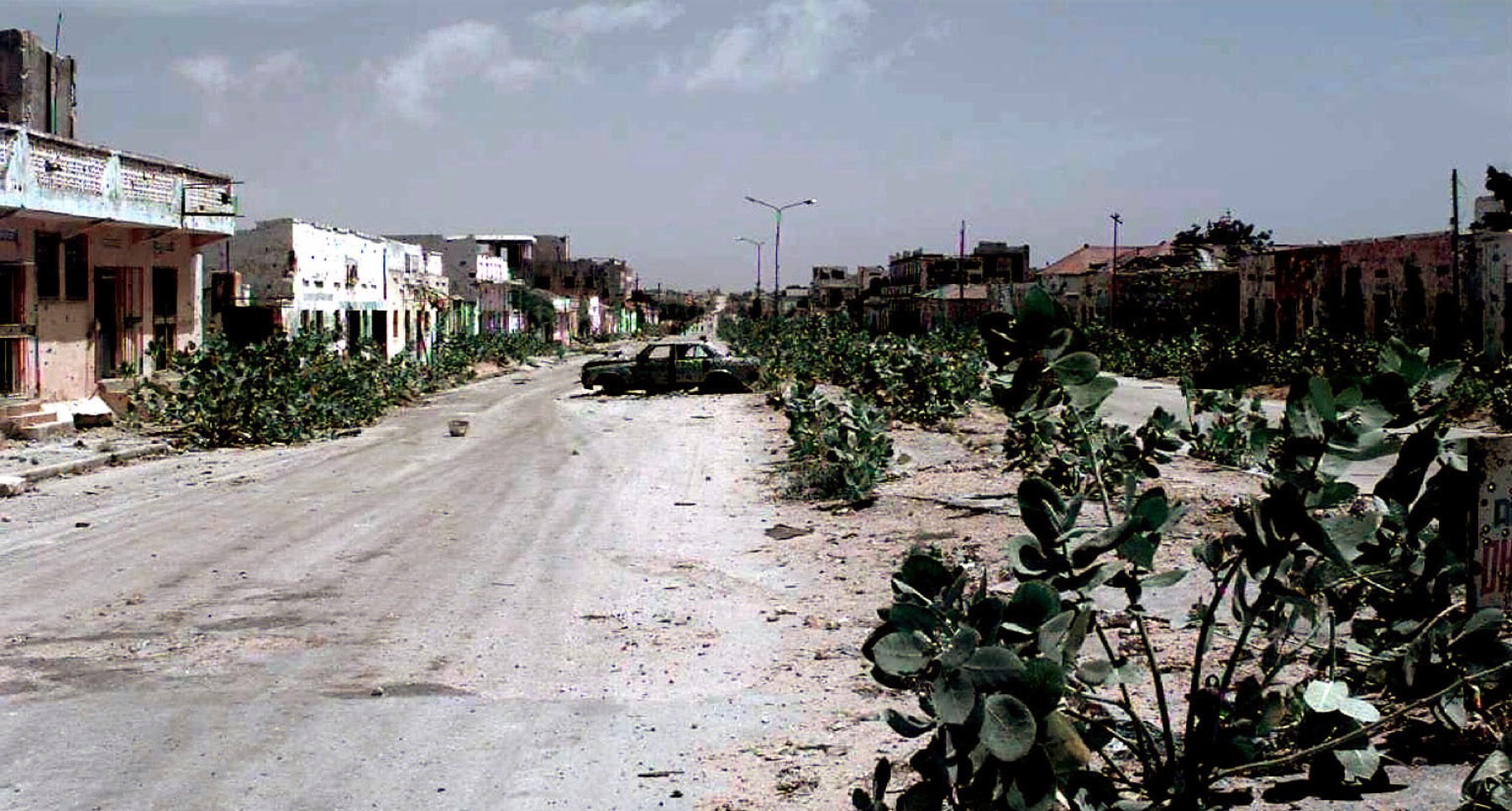
The "Green Line" dividing Mogadishu, January 1993U.S. Navy photo, PH1 R. Oriez
Task Force Ranger
In late August, Defense Secretary Les Aspin sent a special operations task force with one job: capture Aidid and his top men. Its commander was Major General William F. Garrison. Its home was a hangar at the western end of the airport.
It brought together Bravo Company of the 3rd Ranger Battalion; C Squadron of Delta Force; the 160th Special Operations Aviation Regiment, the "Night Stalkers," flying MH-60 Black Hawks and the small MH-6 and AH-6 Little Birds; and Air Force pararescuemen and combat controllers. Six times in August and September the task force went out on a raid. Six times it achieved its tactical aim.
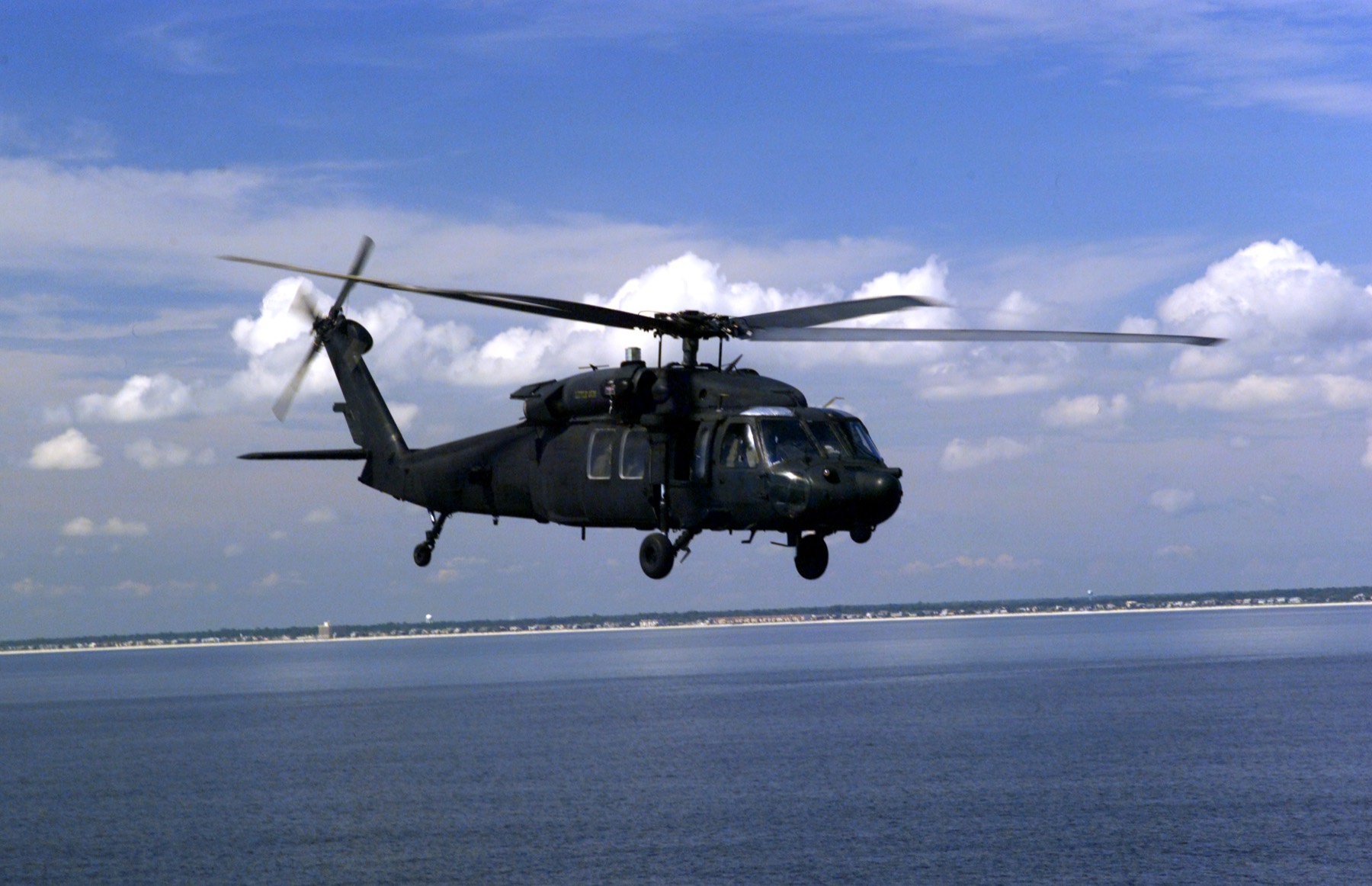
MH-60L Black Hawk, the type flown on 3 October (representative photo, not 1993)U.S. Army photo, Sgt. Kyle J. Cosner
The target
Early on 3 October, word reached the task force: two of Aidid's senior men, his political adviser Omar Salad Elmi and Mohamed Hassan Awale, would be meeting in a building near the Olympic Hotel.
The building stood in the heart of Aidid's territory, beside the Bakara Market, the largest in the city. Going in there by daylight was a serious risk. The planners knew it. They went anyway.
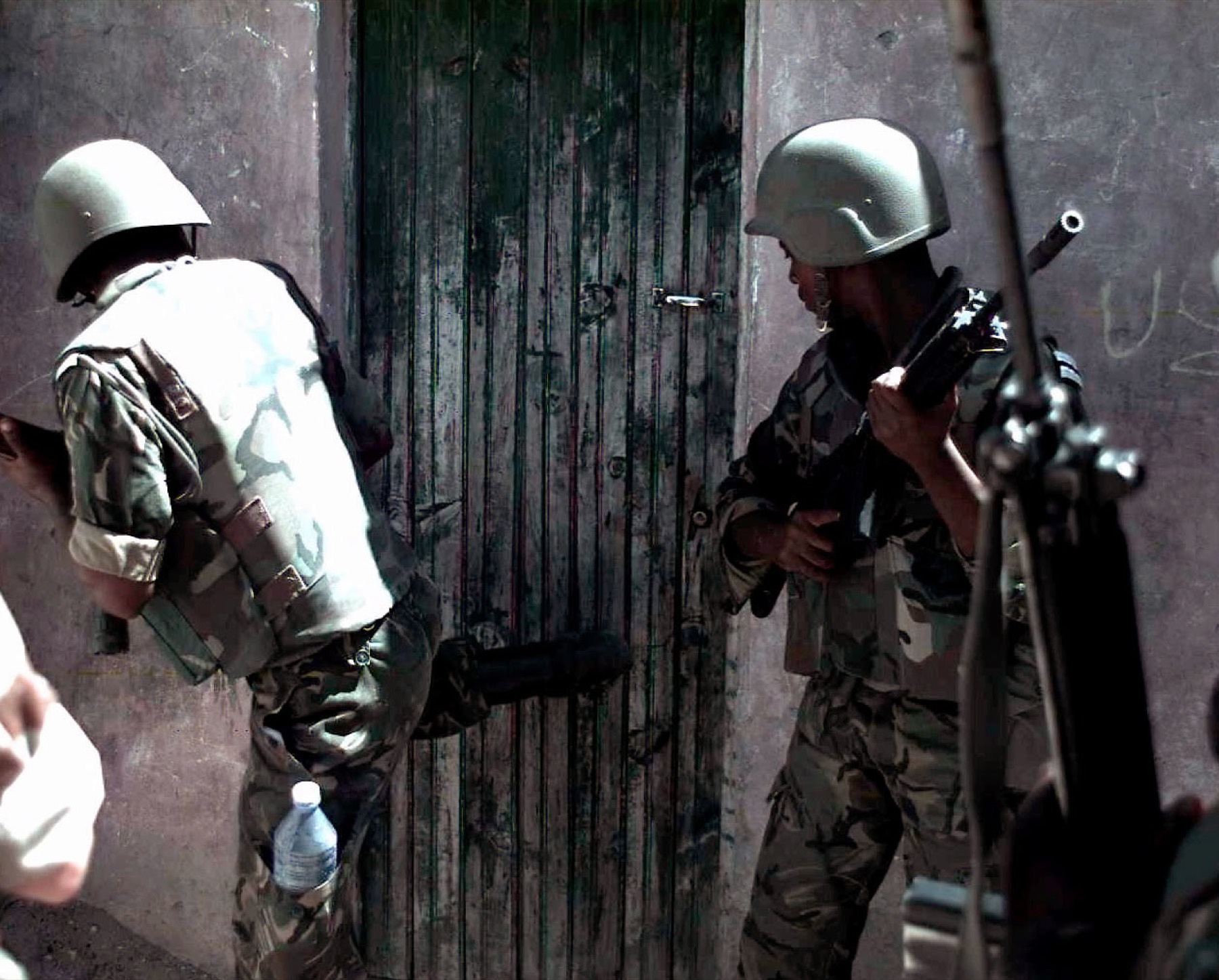
UN soldiers search the Bakara Market for weapons, January 1993 (nine months before the battle)U.S. Navy photo, PH1 R. Oriez
Lift-off
Sixteen helicopters lifted off in a single column. The Little Bird gunships led. Behind them came the Delta assault force, then the four Black Hawks carrying the Rangers, with the rescue and command aircraft at the rear. Already over the target were three observation helicopters and a Navy surveillance plane.
The column swung out over the ocean and down the coast, cut back in over the desert, ran up the western edge of the city and turned to come in from the north. A few minutes behind it, a ground convoy of 12 vehicles under Lieutenant Colonel Danny McKnight set out to carry the prisoners away, by way of the K-4 traffic circle, Via Lenin and National Street.
The Army history puts the launch at "around 1530"; other timelines say 15:32. The order of flight comes from the pilots' own accounts. No one recorded the ground track, so the line on the map is approximate.
On the ground
The Delta operators came in on Little Birds and stormed the building. Four chalks of Rangers slid down ropes from the Black Hawks onto the four corners around it, sealing it off. Chalk Four landed a block north of where it was meant to be.
Private First Class Todd Blackburn, 18, missed the rope. He fell about 70 feet to the street. He lived, badly hurt.
A Black Hawk over the target block during the assault, then smoke and dust over the same block. U.S. government surveillance video, from a clip published by U.S. Special Operations Command in 2019, cropped. Aircraft not identified.
First to fall
In about twenty minutes, the assault force had the two men it came for, and 22 others besides. Staff Sergeant Jeff Struecker led three Humvees back to the airfield with Blackburn. On the way, Sergeant Dominick Pilla, 21, was shot and killed. He was the first American to die that day.
Super Six-One goes down
A rocket-propelled grenade slammed into Super Six-One, the Black Hawk flown by Chief Warrant Officers Cliff Wolcott and Donovan Briley. The helicopter spun into a street about three blocks from the target. Both pilots were killed. Both crew chiefs were badly hurt.
Two Delta snipers aboard survived the crash and fought to hold the site. One of them, Staff Sergeant Daniel Busch, was mortally wounded. A Little Bird, Star 41, set down in the narrow street to pull out the wounded.
Super Six-Eight came in over the wreck and lowered a 15-man search-and-rescue team. As the last men slid down the ropes, a grenade struck its rotor. The pilot held the hover until every man was down, then nursed the aircraft home.
Radio · about 16:20
WE GOT A BLACKHAWK GOING DOWN WE GOT A BLACKHAWK GOING DOWN
WE GOT A BLACKHAWK CRASHED IN THE CITY
61
61 DOWN
Super Six-One going down, seen from high overhead: a small dark shape low over the rooftops, then the dust of the crash. U.S. government surveillance video, from a clip published by U.S. Special Operations Command in 2019, cropped. Aircraft not identified.
The lost convoy
The Rangers and Delta operators at the target set out on foot for the crash site. On the way, Sergeant First Class Earl Fillmore was killed.
McKnight's convoy, its vehicles full of prisoners, tried to reach the wreck by road. Steered by directions from the aircraft overhead, unable to see the streets for itself, it made one wrong turn after another, through roadblocks and crossfire. Sergeant Casey Joyce. Corporal James Cavaco. Private First Class Richard Kowalewski. Sergeant Lorenzo Ruiz. Master Sergeant Tim Martin. All were killed or mortally wounded. With half its men hit, the convoy turned back for the airfield.
Radio · about 17:00
R64 DANNY THINK YOU'VE GONE TOO FAR WEST TRYING TO LOOK AT SECOND CRASH YOU SEEM TO HAVE GONE ABOUT 4 BLOCKS WEST AND 5 BLOCKS SOUTH OVER
K55 STOP GIVING DIRECTIONS THERE FOR A SECOND I THINK YOU'RE TALKING TO THE WRONG CONVOY
I'VE GOT A LOT OF VEHICLES THAT WILL BE ALMOST IMPOSSIBLE TO MOVE QUITE A FEW CASUALTIES GETTING TO THE CRASH SITE IS GONNA BE AWFUL TOUGH, ARE PINNED DOWN
Super Six-Four goes down
Twenty minutes later, a second Black Hawk, Super Six-Four, took a hit in the tail rotor and came down less than a mile to the south. Its pilot, Chief Warrant Officer Michael Durant, and his crew, Chief Warrant Officer Ray Frank, Staff Sergeant Bill Cleveland and Sergeant Tommy Field, were on their own. No ground force could reach them.
Radio · about 16:40
64 ARE YOU OK?
ROGER
GOING IN HARD, GOING DOWN... RAY!
64 IS GOING DOWN. 64 IS DOWN.
ROGER, WE JUST LOST ANOTHER BLACKHAWK, WE ARE TAKING A LOT OF RPG FIRE, WE LOST IT SOUTH OF THE OLYMPIC HOTEL SOUTH OF NATIONAL, WE GOT ANOTHER HAWK OVER HEAD. WE NEED TO ASK THE KILO IF THEY CAN RESPOND AND GIVE THEM SOME HELP.
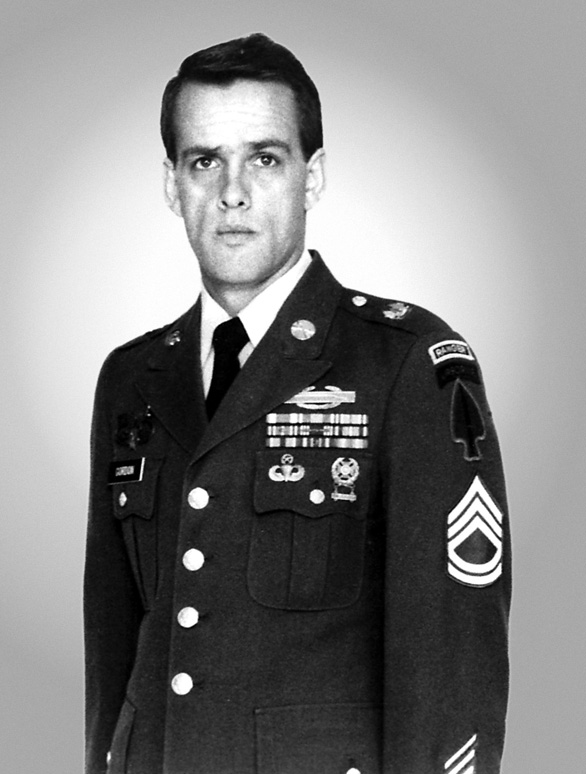
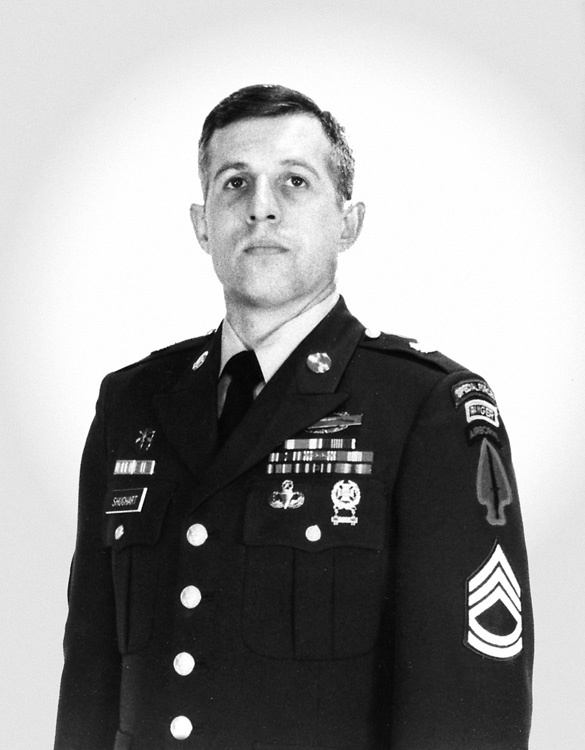
Gordon and Shughart
MSG Gary Gordon, 33SFC Randy Shughart, 35
Circling overhead in Super Six-Two, two Delta snipers, Master Sergeant Gary Gordon and Sergeant First Class Randy Shughart, asked to be put on the ground to protect the crew. They were told no. They asked again, and were told no again. On the third request, they were inserted about 100 metres from the wreck.
They pulled the crew from the aircraft and held off the crowd and the militia closing in, until their ammunition ran out and they were killed. Gordon had given Durant a rifle.
"His actions saved the pilot's life."
Super Six-Two was hit soon afterward and crash-landed. Sources differ on which of the two men fell first.
No one gets through
A company from the 10th Mountain Division's quick reaction force set out from the airfield for the second crash site. Near the K-4 traffic circle it was pinned down, and it had to turn back.
At around 17:40, Crash Site 2 was overrun. Frank, Cleveland and Field were killed. Durant, his leg broken and a vertebra crushed, was taken prisoner. He would be held for eleven days.
Radio · about 17:00, Crash Site 1
J64 R64 THIS IS J64 WE'RE TAKING HEAVY SMALL ARMS FIRE WE NEED RELIEF NOW AND START EXTRACTING
R64 THIS IS R64 UNDERSTAND YOU NEED TO BE EXTRACTED I'VE DONE EVERYTHING I CAN TO GET THOSE VEHICLES TO YOU OVER
J64 ROGER UNDERSTAND BE ADVISED COMMAND ELEMENT WAS JUST HIT HAVE MORE CASUALTIES OVER
The night
As darkness fell, about 90 Rangers and Delta operators were cut off around the first crash site, holed up in the houses along the street with their wounded. All night, Little Bird gunships circled above them, firing into the alleys to keep the attackers back.
Just after seven, Super Six-Six came over to drop water, ammunition and medical supplies. It was hit by grenades before it limped away.
From here the map goes dark, but for a small pool of light. Move your pointer to move it.
Jamie Smith
Corporal Jamie Smith, 21, had been shot in the thigh near the crash site. The bullet hit his femoral artery. For hours the medics fought to keep him alive. No vehicle could get through to them, and he bled to death.
The exact time comes from secondary timelines.
The rescue column
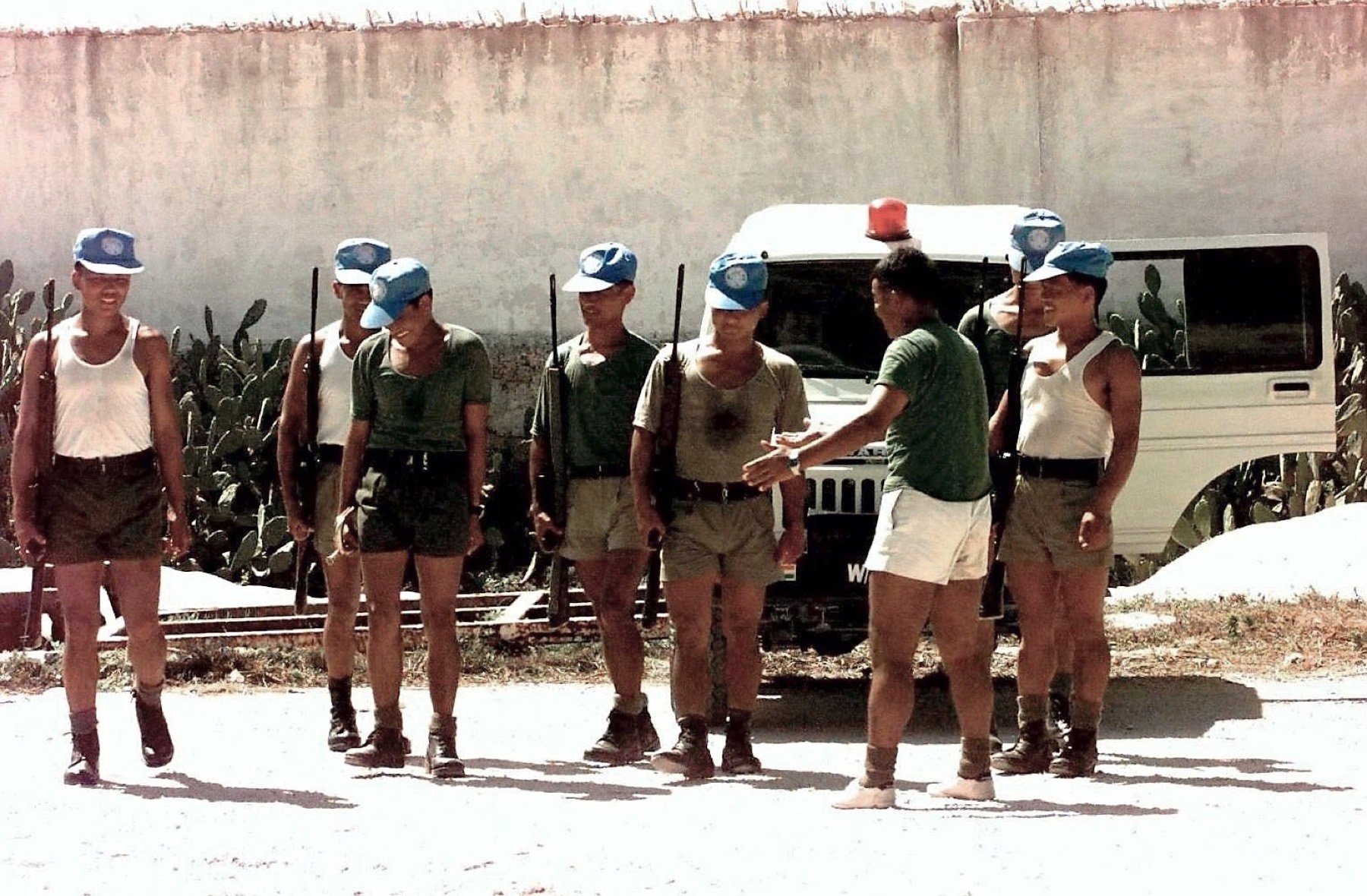
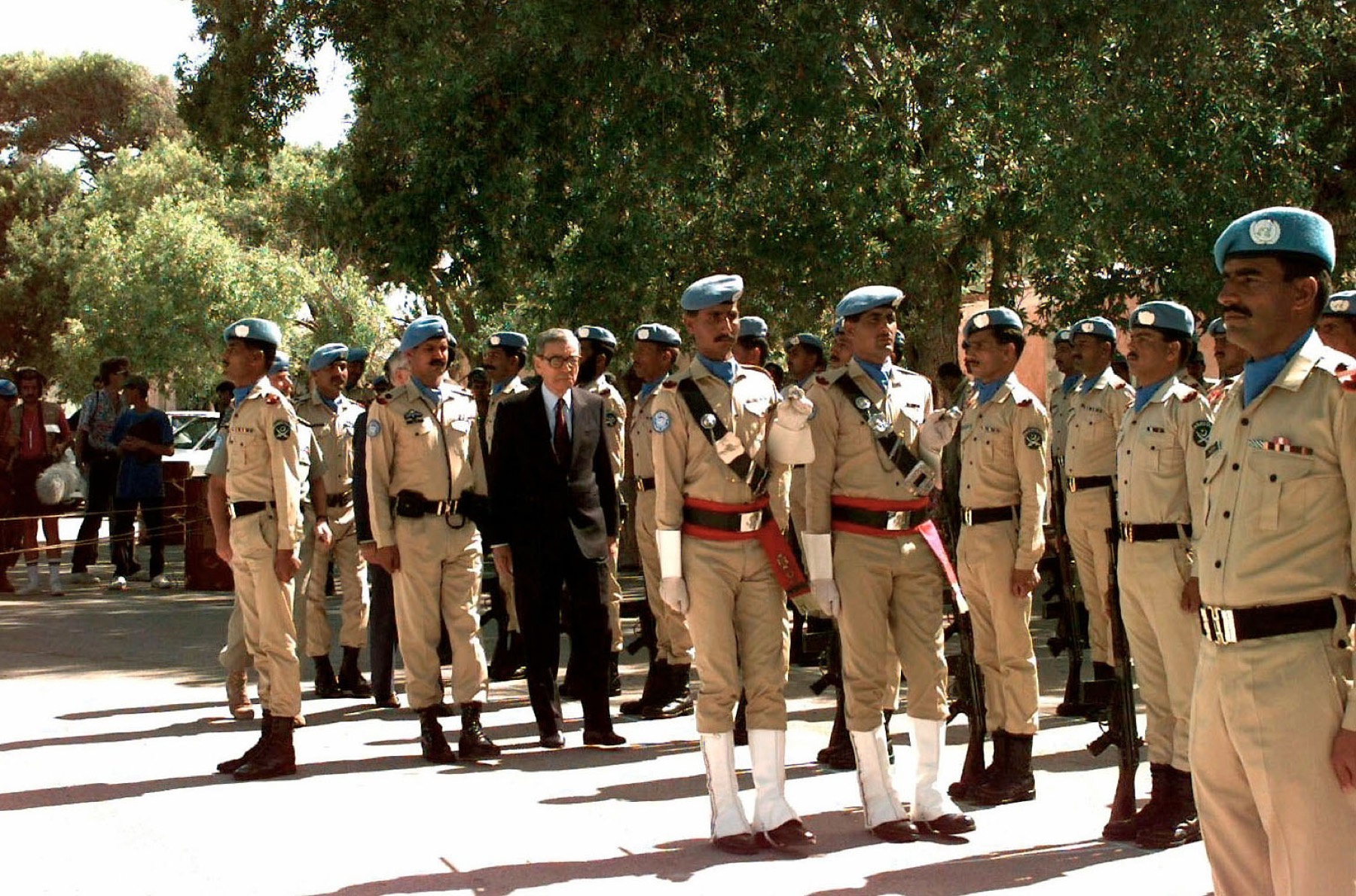
Reaching the trapped men would take armour. At the New Port a column took shape: the 10th Mountain Division, the remaining Task Force Ranger soldiers, Malaysian UN troops in their Condor armoured personnel carriers and four Pakistani M48 tanks, between 60 and 100 vehicles in all. With the Pakistani tanks in front, it pushed north up Via Jen Daaud and west along National Street, under fire the whole way.
Malaysian peacekeepers, Mogadishu, October 1993U.S. DoD photoPakistani UN troops, Mogadishu, 1993U.S. DoD photo, SSgt Lemuel Casillas
The lost platoon
Two Malaysian carriers carrying a 10th Mountain platoon missed a turn and drove into an ambush. A grenade pierced the front of one and killed its driver, Lance Corporal Mat Aznan Awang of the Royal Malay Regiment. The soldiers held out for four hours before help reached them.
Sergeant Cornell Houston, an engineer, was wounded while helping a wounded Malaysian soldier. He died of his wounds later, in Germany. Private First Class James Martin, 23, of the 10th Mountain, was killed on the column.
Through to the men
A little before two in the morning, the column broke through to the first crash site. Another company reached the second and found nothing: no trace of the crew, or of Gordon and Shughart.
At the first site, the soldiers would not leave without Cliff Wolcott. For hours, under fire, they worked to free his body from the wreckage.
The Mogadishu Mile
At first light, the wounded and the dead were loaded into the carriers. There was no room for anyone else. The Rangers and Delta operators who were left went out on foot, running and fighting south through the streets beside the vehicles, to a rally point on National Street where more vehicles were waiting.
The Army history gives 05:42; other accounts say 05:30. Unlike in the 2001 film, the run ended at the rally point, not at the stadium.
The stadium
By about 06:30 they reached the Pakistani base at the city's stadium, where an aid station had been set up. One of the fiercest urban battles American troops had fought since Vietnam was over.
Where they fell
Clear away the routes, and what remains on the map are the places where men died.
Crash-site positions follow published coordinates. The exact spots along the convoy routes are not recorded in the sources used here, so those names are placed along the route.
The toll
Every count of the dead from this battle comes with a caveat. The Somali toll, above all, will never be known exactly.
Americans killed
18on 3–4 October; a 19th, SFC Matt Rierson, was killed by a mortar round on 6 October
Americans wounded
73–84figures differ by source; the Army's own history implies 79
Malaysians killed
1Mat Aznan Awang; the Army history counts 2. Seven were wounded
Pakistanis wounded
2Pakistani tanks led the rescue column
Somalis killed
Hundredsestimates run from about 200 (Red Cross) to about 500 killed; the Army history gives 500–1,500 casualties
The Americans fought through crowded neighbourhoods where militia fighters moved among civilians, and where women and children were in the crowds. The journalist Scott Peterson estimated that about a third of the Somali dead were women and children. They are remembered here, too.
Roll call
In the order they fell, as far as the record allows.
Ranks are as given by the US Army Special Operations Command and the 1993 Pentagon release; several men were promoted after their deaths, and some sources differ on rank or hometown. Where they differ, the Special Operations Command rank is used for special operations soldiers and the 1993 release for the others.
Task Force Ranger · 3 October 1993
Evacuation run · 16:02
SGT Dominick M. Pilla
21 · Vineland, New JerseyB Co, 3rd Ranger BnKilled on the Humvee column carrying PFC Blackburn back to the airfield. The first American to die.
36 · Cuba, New York160th SOARPilot of Super Six-One, killed when it was shot down. His comrades would not leave until they had freed his body from the wreck.
32 · Kampung Parit Panjang, Baling, Kedah, Malaysia19th Bn, Royal Malay RegimentDriver of a Malaysian Condor carrier, killed when a grenade pierced its front. Posthumously promoted to corporal and awarded the Seri Pahlawan Gagah Perkasa.
31 · Mobile, AlabamaC Co, 41st Engineer Bn, 10th MountainWounded with the lost platoon while helping a wounded Malaysian soldier. Died of his wounds in Germany.
The raid captured the men it was sent for. It also ended the American mission.
Television screens around the world showed the bodies of American soldiers being dragged through the streets of Mogadishu. On 6 October, President Bill Clinton ordered a halt to operations against Aidid, except in self-defence. The next day he announced that all American forces would be out of Somalia by 31 March 1994. Most were gone by 25 March.
Michael Durant was released on 14 October, after eleven days in captivity. General Garrison wrote to the President accepting full responsibility. Les Aspin, who that September had turned down his commanders' requests for tanks and armoured vehicles, resigned in December.
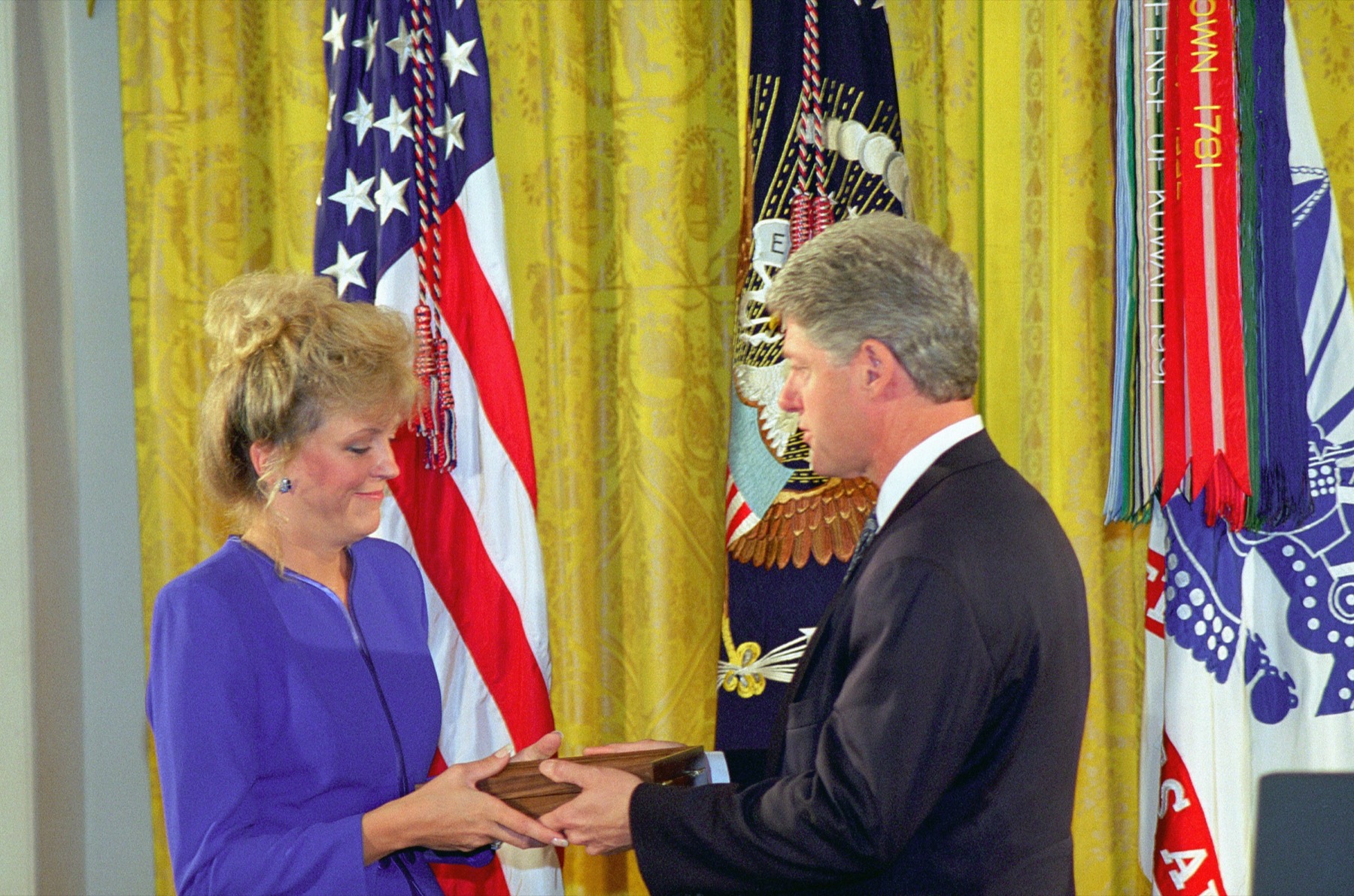
On 23 May 1994, Gary Gordon and Randy Shughart were posthumously awarded the Medal of Honor, the first since the Vietnam War. The President presented the medals to their widows, Carmen Gordon and Stephanie Shughart.
The White House, 23 May 1994U.S. Army photo, Jerome Howard
The battle cast a long shadow over American policy. Many historians link it to Washington's reluctance to intervene in the Rwandan genocide in 1994. But the policy restricting American support for UN operations was already being written before October 1993, and how far Mogadishu shaped it is still debated.
UN forces left Somalia in March 1995. The civil war went on.
Sources and credits
Richard W. Stewart, The United States Army in Somalia, 1992–1994, CMH Pub 70-81-1, US Army Center of Military History. history.army.mil
USASOC History Office, ARSOF Fallen, 1993 entries. arsof-history.org
Medal of Honor citations, MSG Gary I. Gordon and SFC Randall D. Shughart, US Army.
"Pentagon releases Somalia casualty list," UPI, 6 October 1993. upi.com
Mark Bowden, "Blackhawk Down," The Philadelphia Inquirer, 1997, and Black Hawk Down: A Story of Modern War (1999).
"Radio transmission audio clips," The Philadelphia Inquirer, 1997: transcripts and audio clips of the Task Force Ranger command radio tapes. The transcripts are quoted exactly as printed, in capitals and without added punctuation; the recordings are the Inquirer's 1997 clips, unedited. Archived copy
Overhead surveillance video of 3 October 1993, a work of the U.S. government, excerpted from a clip published by U.S. Special Operations Command on 3 October 2019. Cropped to remove added captions; no sound.
For the air assault's order of flight and route: Michael J. Durant, In the Company of Heroes (2003); Kent DeLong and Steven Tuckey, Mogadishu! Heroism and Tragedy (1994); Leigh Neville, Day of the Rangers (2018); Eugene G. Piasecki, "If You Liked Beirut, You'll Love Mogadishu," Veritas 3:2 (2007), USASOC History Office.
PBS Frontline, "Ambush in Mogadishu" (1998). pbs.org
Capt. Charles P. Ferry, "Mogadishu, October 1993: Personal Account of a Rifle Company XO," Infantry, September–October 1994. The route map for the rescue column.
Rick Atkinson, "The Raid That Went Wrong" and "Night of a Thousand Casualties," The Washington Post, 30–31 January 1994.
Scott Peterson, Me Against My Brother (2000), for the estimate of Somali civilian casualties.
Wikipedia, "Battle of Mogadishu (1993)" and "Timeline of the 1993 Battle of Mogadishu," used for cross-checking.
Made by Jordan Flaig. If you served there, lost someone there, or see something wrong on this page, please say so: corrections can be sent through jordanflaig.com, and they will be made.